Why Does My Drain Keep Clogging? 7 Common Causes and How to Fix Them
If your drain keeps clogging repeatedly, the short answer is this: a one-time clog is usually debris. A drain that clogs again and again points to a root cause that a plunger alone will never fix. The seven most common culprits are grease buildup, hair accumulation, hard water scale, soap scum, foreign objects, tree root intrusion, and a damaged sewer line. Identifying which one you’re dealing with is the first step to a lasting fix.
In Aledo and the surrounding Parker County area, hard water is a real factor. The water hardness in this region regularly runs above 200 mg/L (about 12 grains per gallon), which accelerates mineral scale inside pipes and makes soap scum clogs worse than they’d be in softer-water cities. That local detail matters when you’re choosing the right fix.
Work through the steps below in order. Each one tells you what to do, why it works, and when the job is bigger than a DIY fix.
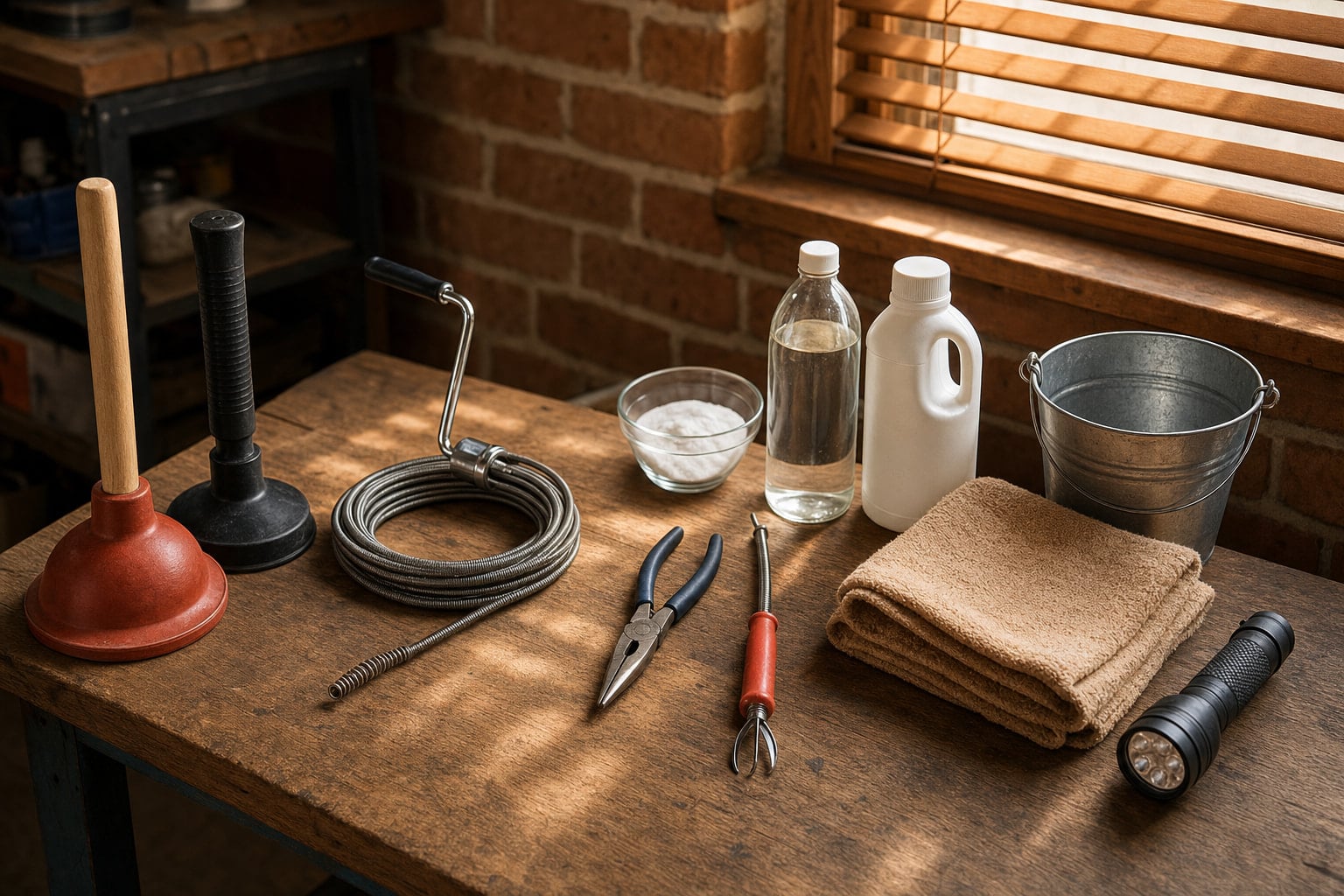
Before You Start: What You’ll Need
Cup plunger (for sinks and tubs) and a flange plunger (for toilets)
Drain snake or hand auger (a 25-foot cable handles most household clogs)
Needle-nose pliers or a drain hair removal tool
Baking soda and white vinegar (for mild organic buildup)
Enzyme-based drain cleaner (safer for pipes than caustic chemical drain openers)
Bucket and old towels
Flashlight
Rubber gloves
A word on chemical drain cleaners: Products containing lye or sulfuric acid can soften PVC pipe joints over time and are hard on older cast-iron drains. The EPA’s Safer Choice program recommends enzyme-based or bio-enzymatic cleaners as a lower-risk alternative for routine maintenance.
Step 1: Identify Which Drain Keeps Clogging and How Often
A single slow drain almost always means a localized blockage. Multiple slow drains throughout the house point to a shared main line problem. Before you grab a tool, note which fixtures are affected and whether the clog returns within days, weeks, or months of clearing it.
One drain, slow every few weeks: Hair, grease, or soap scum buildup (Steps 2, 3, or 4)
One drain, fully blocked suddenly: Foreign object (Step 5)
Multiple drains slow at once: Main line or sewer issue (Steps 6 and 7)
Gurgling sounds when water drains: Partial blockage or venting problem
Hair is the number-one cause of recurring bathroom sink and tub drain clogs. A single shower can shed 50 to 100 strands of hair, and those strands tangle with soap residue to form a dense mat inside the P-trap or just below the drain cover. The fix is physical removal, not chemicals.
Remove the drain stopper or cover (most unscrew or lift out).
Use a hair removal tool or needle-nose pliers to pull out the mat. Expect it to be unpleasant.
Run hot water for 30 seconds to flush loose debris.
If water still drains slowly, feed a hand auger 2 to 3 feet into the drain to break up anything deeper.
Install a mesh drain screen to catch hair going forward. This single step prevents most repeat bathroom clogs.
Step 3: Break Up Grease and Food Buildup in Kitchen Drains
Grease is the leading cause of kitchen drain clogs. Fats, oils, and grease (FOG) are liquid when hot but solidify on the cooler walls of your drain pipe, narrowing the opening over time. Coffee grounds and food scraps stick to the grease layer and accelerate the buildup.
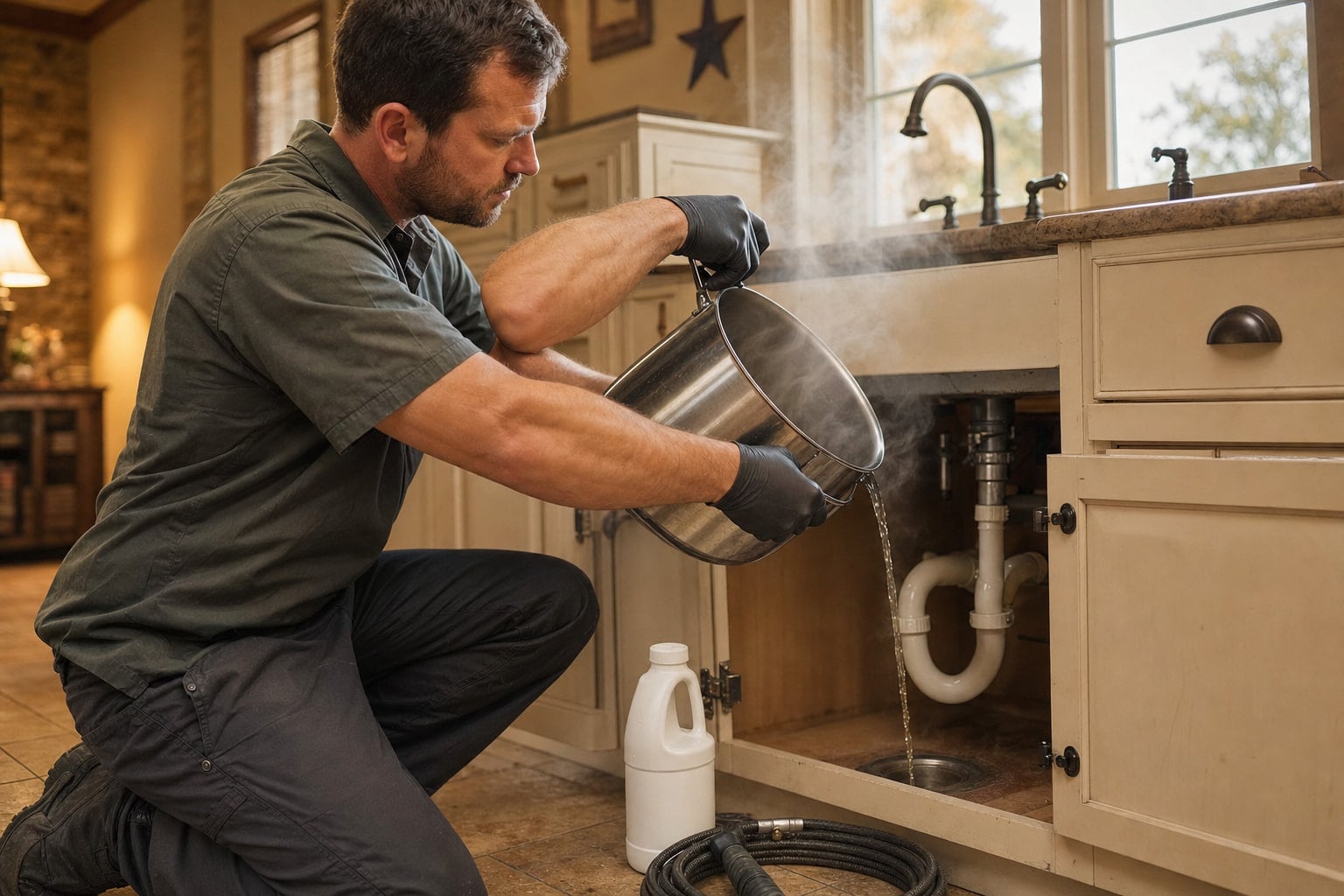
Pour a pot of near-boiling water down the drain slowly to soften the grease layer.
Follow with half a cup of baking soda, then half a cup of white vinegar. Let it fizz for 15 minutes.
Flush again with hot water.
For stubborn buildup, use an enzyme-based drain cleaner monthly. These products digest organic matter without damaging pipe walls.
Going forward, pour cooled grease into a container and throw it in the trash. Never pour it down the drain.
Aledo’s hard water leaves calcium and magnesium deposits inside pipes the same way it leaves white scale on your faucets. Soap scum forms when the minerals in hard water react with soap, creating a sticky residue that clings to pipe walls and catches everything else that flows by.
Pour one cup of white vinegar down the drain and let it sit for 30 minutes. The mild acid dissolves light mineral deposits.
Flush with hot water.
For heavier scale, a plumber can use a hydro-jetting service that blasts the interior of the pipe clean with high-pressure water, typically at pressures between 1,500 and 4,000 PSI depending on pipe size and condition.
Consider a water softener if scale is a recurring problem throughout your home. Softened water dramatically reduces both scale buildup and soap scum formation.
A drain that clogs every few weeks in a hard-water area is almost never just a hair problem. It’s mineral scale narrowing the pipe until almost anything causes a backup.
Step 5: Retrieve or Dislodge a Foreign Object
Toys, bottle caps, cotton swabs, dental floss, and hygiene products are common culprits in bathroom drains. In the kitchen, utensil caps and broken dish pieces end up in the drain more often than you’d think. A sudden, complete blockage with no gradual buildup usually means a foreign object.
Shine a flashlight into the drain opening. If you can see the object and it’s within reach, use needle-nose pliers to pull it out. Don’t push it deeper.
If it’s not visible, remove the P-trap under the sink (place a bucket underneath first). The object is often sitting right in the curve of the trap.
If the object has passed beyond the trap, a hand auger can sometimes hook and retrieve it. Feed the cable slowly and rotate as you go.
If the object is lodged in the drain line and you can’t retrieve it, stop. Forcing it further can push it into the main line where it becomes a much bigger problem.
Step 6: Check for Tree Root Intrusion in Your Drain Lines
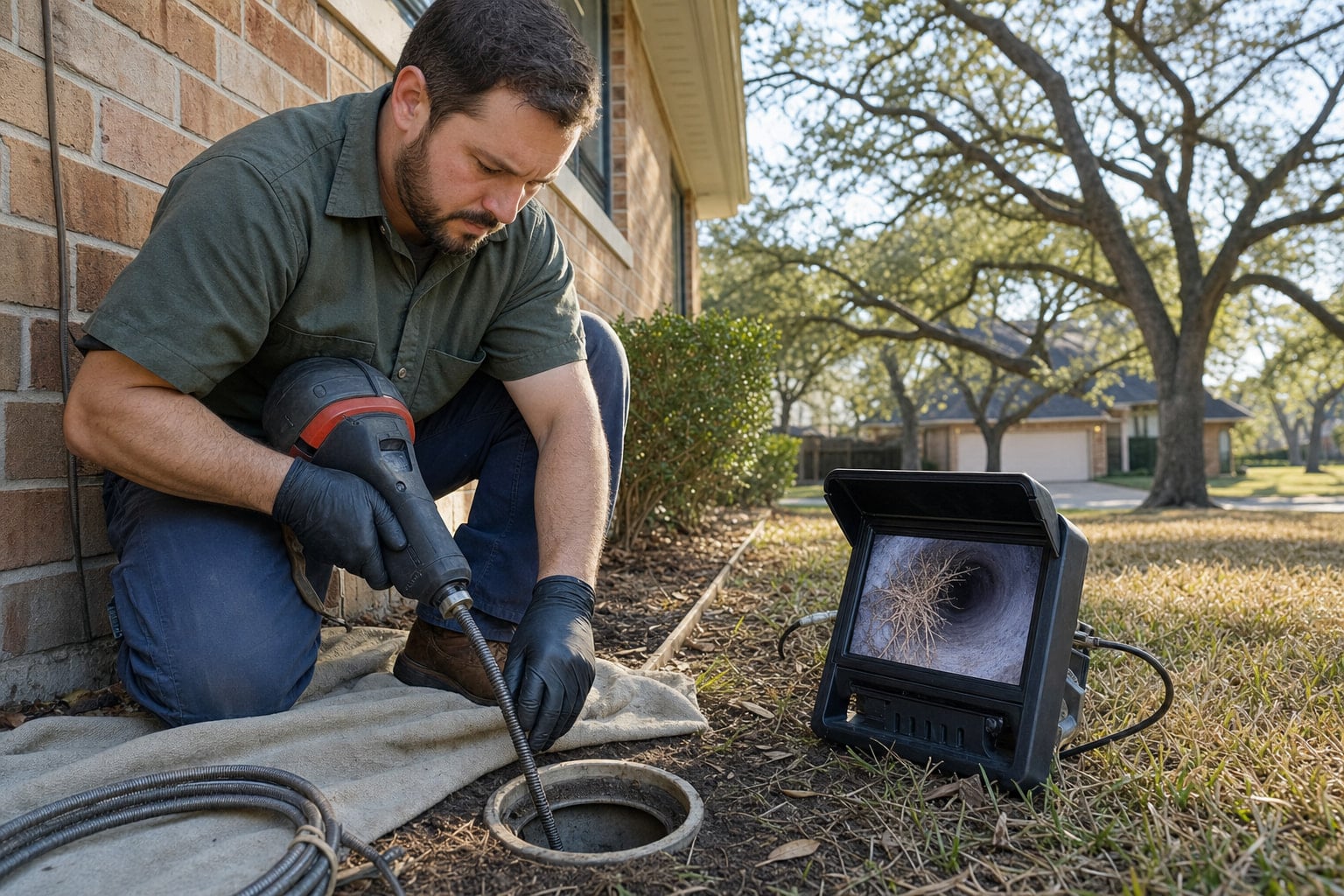
Tree roots are a serious and underappreciated cause of recurring drain clogs in Aledo neighborhoods with mature trees. Roots naturally seek moisture and can enter sewer lines through tiny cracks or loose joints, then grow into a dense mass that catches toilet paper and debris. This is almost always a main line problem, not a fixture-level clog.
Signs that roots may be involved include:
Multiple drains slow at the same time
Gurgling toilets when you run a sink or washing machine
Clogs that return within days of being cleared
Sewage odors in the yard or near floor drains
DIY options are limited here. A rented electric drain snake can cut through a light root mass temporarily, but roots grow back quickly without a proper treatment. A plumber with a sewer camera can confirm root intrusion and recommend the right fix, whether that’s root cutting, chemical root treatment, or pipe repair. Learn more about what’s involved with Sewer Line Repair & Replacement.
Recurring Clogs, Real Fix
A drain that clogs again and again usually has a deeper cause, and we’ll find it before it turns into a bigger repair.
Step 7: Inspect for a Damaged or Failing Sewer Line
If every fix you’ve tried has only worked temporarily, the problem may be structural. Cracked, collapsed, or bellied sewer lines (sections where the pipe has sagged and holds standing water) cause chronic backups that no amount of snaking will permanently resolve. Older homes in Aledo with clay or cast-iron sewer lines are especially vulnerable.
Watch for sewage backing up into floor drains or tubs when you flush a toilet. That’s a strong indicator of a main line failure.
Look for wet patches or unusually green, lush grass over your sewer line path in the yard. Leaking sewage acts as fertilizer.
Schedule a sewer camera inspection. A camera run through the line gives a definitive answer without digging. Most inspections take under an hour.
Based on the camera findings, a plumber can recommend pipe lining (trenchless repair), spot repair, or full replacement depending on the extent of the damage.
Most hair and grease clogs are genuinely DIY-friendly. But some situations call for a trained plumber, and trying to force a fix can make things worse or more expensive.
Call a professional when:
Multiple drains are slow or backing up at the same time
You’ve cleared the clog twice and it returned within a week
There’s sewage odor inside the house or in the yard
Water is backing up into a tub or floor drain when you flush
You suspect a foreign object is lodged past the P-trap
The drain line is older cast iron, clay, or Orangeburg pipe
You see wet spots, soft soil, or sinkholes near your sewer line path
Professional Drain Cleaning in Aledo, TX goes well beyond what a consumer snake can do. Hydro-jetting, camera inspection, and root cutting are tools that clear the full diameter of the pipe and address the actual cause rather than just punching a temporary hole through the blockage.
If the situation is urgent, an emergency plumber in Aledo, TX can respond when a clog has turned into a backup that’s affecting multiple fixtures or causing water damage.
FAQs
Why does my drain keep clogging even after I just cleared it?
A clog that returns quickly almost always means the root cause wasn’t addressed. Snaking punches a hole through a blockage but leaves grease, scale, or root material on the pipe walls. The pipe re-clogs as debris catches on what’s left. A hydro-jet cleaning or camera inspection finds and removes the actual cause.
Is it safe to use chemical drain cleaners regularly?
Occasional use on a fully plastic drain system is generally low risk, but regular use of caustic (lye-based) cleaners can soften PVC joints and corrode older metal pipes over time. Enzyme-based cleaners are a safer choice for monthly maintenance. Avoid chemical cleaners entirely if you have a septic system, as they kill the beneficial bacteria the tank needs.
Can hard water really cause drain clogs in Aledo?
Yes. Parker County water hardness is consistently high, often above 200 mg/L. Calcium and magnesium deposits build up inside drain pipes just like they do on faucets and showerheads. Over months, the pipe’s interior diameter narrows enough that normal debris causes a backup. A water softener and periodic hydro-jetting address both problems.
How do I know if tree roots are in my sewer line?
The clearest signs are multiple slow drains, gurgling toilets, and clogs that return within days of being cleared. A sewer camera inspection confirms root intrusion definitively. Roots in a sewer line don’t go away on their own and typically require professional cutting, chemical treatment, or pipe repair to resolve.
What’s the difference between a drain snake and hydro-jetting?
A drain snake (auger) is a flexible cable that breaks through or retrieves a blockage. It’s effective for hair mats and soft clogs but leaves residue on pipe walls. Hydro-jetting uses high-pressure water (typically 1,500 to 4,000 PSI) to scour the full interior of the pipe, removing grease, scale, and root material completely. Hydro-jetting lasts significantly longer between service calls.
Should I be worried about water damage from a recurring clog?
A slow drain by itself rarely causes water damage, but a full backup can overflow fixtures and saturate floors, walls, and subfloor material quickly. Sewage backups carry additional health risks. If a clog has caused water to overflow onto flooring or into a cabinet, address the moisture promptly to prevent mold growth.
How much does professional drain cleaning cost in Aledo, TX?
A standard drain snaking typically runs in the range of $100 to $250 for a single fixture. Hydro-jetting costs more, often $300 to $600 or higher depending on pipe length and access. Sewer camera inspections are usually $150 to $350. These are general market ranges, not quotes from any specific contractor. For local pricing, see How Much Does a Plumber Cost in Aledo, TX?
Ready to Stop Fighting the Same Clog?
If your drain keeps clogging and the DIY fixes aren’t holding, Texas Plumbing and Drain serves Aledo and the surrounding Parker County area with professional drain cleaning, sewer camera inspections, and full Plumbing in Aledo, TX. Whether you need a quick drain clearing or a full sewer line evaluation, a Plumber in Aledo, TX from our team can diagnose the actual cause and fix it right the first time. Call us at (682) 452-6455 to schedule a visit.
Aledo Drain Help, Here
Don’t keep plunging the same drain every week. Call Texas Plumbing and Drain and get it cleared the right way.