Why Does Your Water Heater Make Popping or Rumbling Sounds? Common Causes Explained
A water heater making popping or rumbling sounds is almost always caused by sediment buildup on the tank floor. Minerals in Aledo’s hard water settle at the bottom of the tank over time, and when the burner fires, water trapped beneath that sediment layer heats up and forces its way through, creating those familiar popping, rumbling, or gurgling noises. Left alone, the problem shortens the heater’s life and drives up energy bills.
That said, sediment isn’t the only culprit. Depending on when you hear the noise and what it sounds like, the cause could be a failing heating element, a faulty pressure relief valve, thermal expansion, or even a loose inlet tube. This guide walks through each symptom so you know what’s happening, what you can safely check yourself, and when the fix needs a pro.
Symptom-to-Cause Quick Reference
Use this table to match what you’re hearing to the most likely cause before reading the detailed sections below.
Sound You Hear
When You Hear It
Most Likely Cause
Urgency
Popping or percolating
During heating cycle
Sediment on tank floor
Schedule service soon
Deep rumbling or boiling
Constant or near-constant
Heavy sediment, overheating
Prompt — possible overheating
Sizzling or hissing
Intermittent, near the base
Condensation or small internal leak
Inspect now — leak risk
Ticking or tapping
As tank heats or cools
Thermal expansion in pipes or straps
Usually minor; monitor
Knocking or banging
When hot water shuts off
Water hammer / thermal expansion
Address within weeks
Screeching or whining
Only when a tap is open
Partially closed valve or failing inlet
Check valves immediately
If You Hear Popping During the Heating Cycle
Popping during the heating cycle is the classic sign of sediment buildup. Aledo sits in Parker County, where municipal water and many private wells carry high mineral content. Calcium and magnesium carbonate settle on the tank floor and calcify into a hard crust. The burner heats water trapped beneath that crust, and the steam bubbles pop as they escape through it.
According to the U.S. Department of Energy’s Energy Saver resource on water heating, sediment-laden tanks can lose measurable efficiency because the burner has to work harder to heat water through the insulating mineral layer. That translates directly to higher gas or electric bills.
What you can safely check
Listen for the popping to occur only during the 20-40 minute heating window, not constantly. Constant noise points to a worse problem (see the rumbling section below).
Check the water temperature at a nearby tap. If it’s taking longer than usual to get hot, sediment is likely reducing efficiency.
Look at the tank’s age. Most tank water heaters last 8-12 years. A unit older than 10 years with heavy popping is often past the point where flushing alone helps.
When to call a plumber
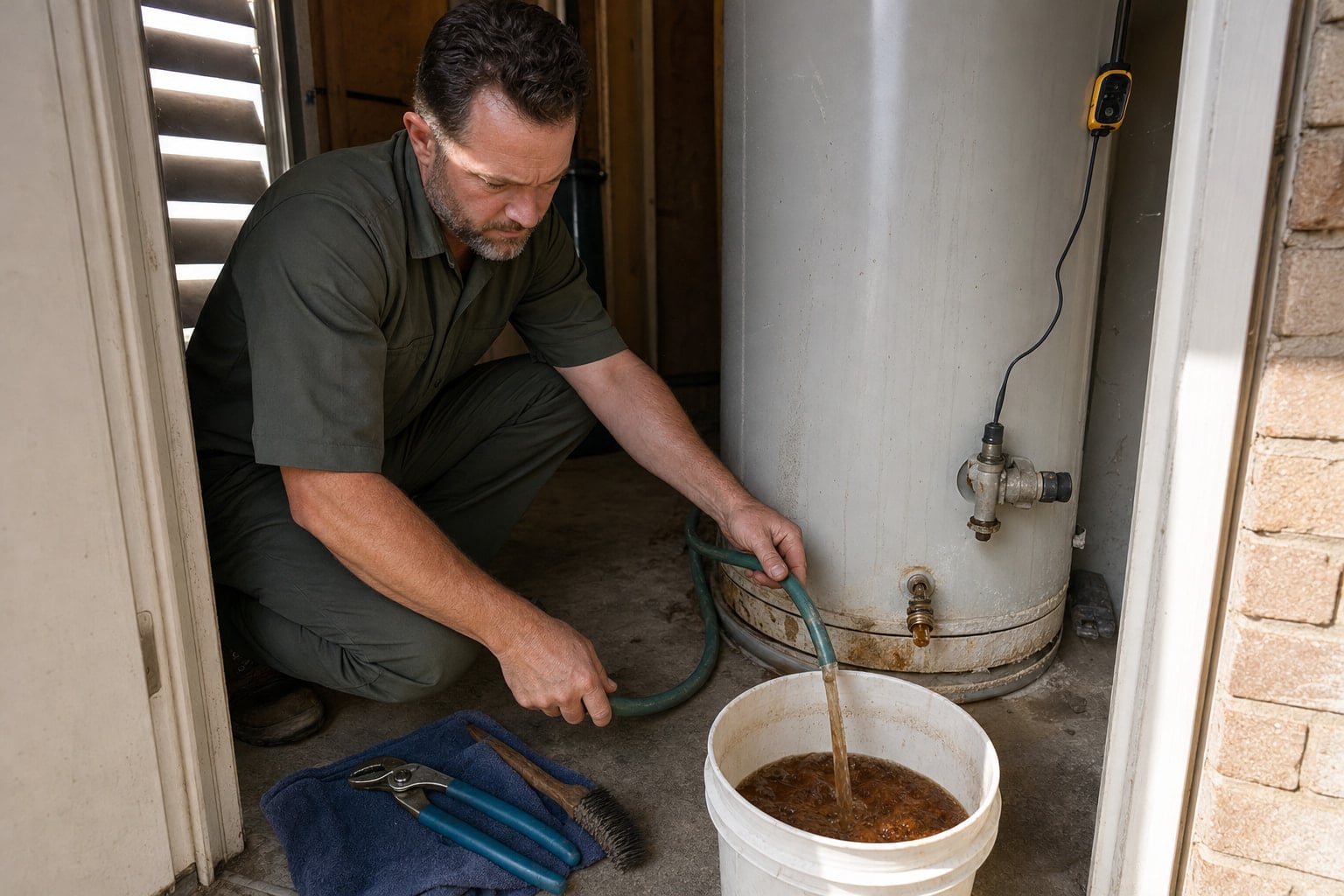
A plumber can flush the tank to remove loose sediment, typically by attaching a hose to the drain valve and running water until it clears. If the sediment has hardened into scale, flushing won’t fully solve it and the tank may need replacement. For Water Heater Repair in Aledo, TX, schedule service before the sediment causes the tank floor to overheat and crack.
If You Hear a Deep Rumbling or Near-Constant Boiling Sound
A deep, constant rumble means the sediment layer has grown thick enough that the water above it is essentially boiling inside the tank. This is a more serious stage of the same sediment problem, and it can cause the tank to overheat, stress the anode rod, and accelerate corrosion of the tank lining.
A rumbling water heater isn’t just noisy — it’s a tank working twice as hard to do half the job, and the extra strain shows up on your energy bill before it shows up as a leak.
What you can safely check
Feel the outside of the tank near the base (carefully, it may be warm). Uneven hot spots can indicate the burner is cycling longer than normal.
Note whether the rumbling started gradually or appeared suddenly. Gradual onset is sediment; sudden onset may point to a failing element or thermostat.
When to call a plumber
Constant rumbling warrants a professional inspection soon, not eventually. A plumber will assess whether flushing, an element swap, or full replacement is the right call. If your unit is approaching 10 years old, review your options for Water Heater Installation in Aledo, TX so you’re not caught off guard by a sudden failure.
Sediment Builds Up Fast
Hard water in Aledo accelerates mineral buildup, and a flush or repair call now can save you from a much costlier fix later.
If You Hear Sizzling or Hissing Near the Base of the Tank
Sizzling near the bottom of a gas water heater usually means water is dripping onto the burner. That water can come from condensation (common on new tanks or in humid conditions), a weeping pressure relief valve, or a small leak at a fitting. On electric units, a hissing sound often points to a failing lower heating element.
What you can safely check
Look for moisture or a small puddle at the base of the tank. A dry floor rules out an active leak.
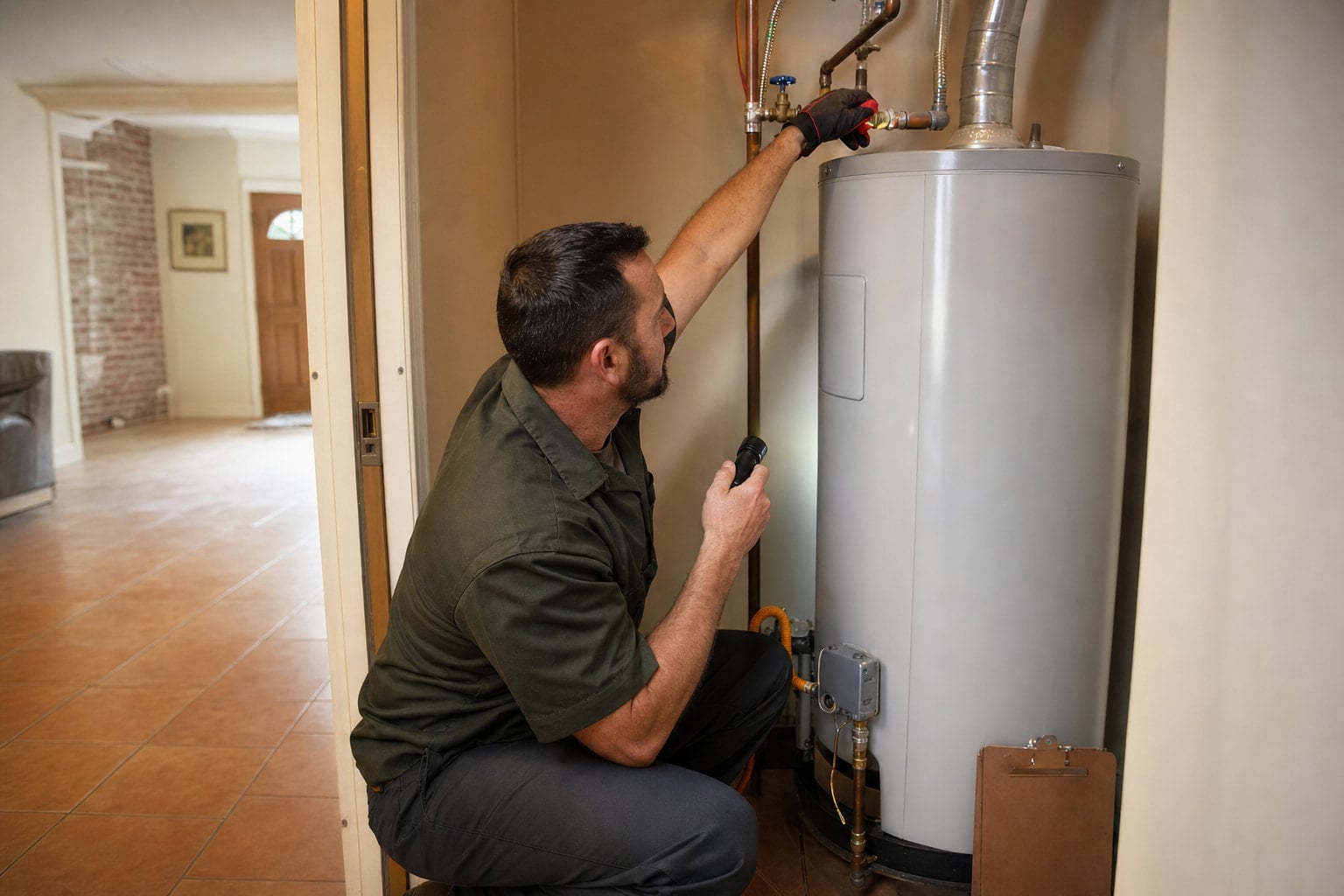
Inspect the temperature and pressure (T&P) relief valve on the side of the tank. If it’s dripping, the valve may be releasing pressure as designed (which means pressure is too high) or the valve itself may be faulty.
Check the cold-water inlet and hot-water outlet connections at the top for drips running down the tank sides.
When to call a plumber
Any active leak near a water heater needs prompt attention. A dripping T&P valve can indicate dangerously high pressure inside the tank. High system pressure is also hard on every pipe in the house. If you’ve noticed pressure issues elsewhere, read about What Is a Plumbing Pressure-Reducing Valve and How Does It Protect Your Home’s Pipes? to understand how a PRV can protect your system. Don’t ignore a hissing tank — call an Emergency Plumber in Aledo, TX if you see water pooling or smell gas.
If You Hear Ticking or Tapping as the Tank Heats or Cools
Ticking and tapping are usually thermal expansion sounds, not a sign of a failing tank. As the water inside heats up, the metal tank expands slightly. Pipe straps, the flue pipe on gas units, and nearby supply lines can all tick as they expand and contract against framing or hangers. This is the least urgent noise on this list.
What you can safely check
Trace the sound. If it’s coming from the pipes above or beside the tank rather than from inside the tank itself, it’s almost certainly thermal movement.
Check that pipe straps and hangers are snug but not over-tightened. A strap that grips too hard will amplify ticking.
If the ticking is loud and coming from inside the tank, it may be a dip tube (the plastic tube that directs cold water to the bottom) that has broken and is rattling around. A broken dip tube also causes inconsistent hot water.
When to call a plumber
Loose straps are a quick fix. A broken dip tube requires draining the tank and replacing the tube, which is straightforward for a plumber but messy to DIY. If you’re unsure whether the sound is inside or outside the tank, a plumber can diagnose it in a short visit.
If You Hear Knocking or Banging When Hot Water Shuts Off
A sharp knock or bang right after you close a hot-water tap is water hammer. When a valve closes quickly, the moving column of water has nowhere to go and slams into the closed valve, sending a pressure wave back through the pipes. Thermal expansion can also cause banging as hot water pushes against a closed system.
What you can safely check
Note whether the bang happens only on hot water lines or on cold lines too. Hot-only banging points to thermal expansion; both hot and cold points to water hammer throughout the system.
Check whether your home has a water hammer arrestor installed near the water heater. These are small devices that absorb pressure spikes and cost roughly $10-$30 at a hardware store.
High water pressure (above 80 psi) makes water hammer significantly worse. You can check your pressure with an inexpensive gauge at any hose bib.
When to call a plumber
Repeated water hammer stresses pipe joints, valves, and appliance connections over time. If your pressure reads above 80 psi, a plumber can install or adjust a pressure-reducing valve. Learn more about how that works on our Water Pressure & Pressure-Reducing Valve (PRV) Repair page.
If You Hear Screeching or Whining When a Tap Is Open
Screeching or a high-pitched whine that only happens while hot water is flowing almost always points to a valve that isn’t fully open. The water is being forced through a narrow gap, and the turbulence creates noise. Common culprits are a partially closed gate valve on the cold-water supply line, a failing ball valve, or a worn inlet valve inside the tank.
What you can safely check
Locate the cold-water shutoff valve on top of the water heater and confirm it’s fully open (handle parallel to the pipe for ball valves, fully counterclockwise for gate valves).
Check any other shutoff valves between the meter and the heater. A valve that was partially closed during a repair and never fully reopened is a common cause.
If all valves are fully open and the screeching persists, the inlet valve or pressure relief valve inside the tank may be failing.
When to call a plumber
A failing internal valve needs professional replacement. Screeching that continues after you’ve confirmed all external valves are open is not a DIY fix. Call Texas Plumbing and Drain at (682) 452-6455 to have the valve inspected before it fails completely.
Not Sure What’s Wrong?
Our team can inspect your water heater, walk you through what we find, and give you a straight answer on repair or replacement.
Parker County’s water hardness runs high, which means sediment accumulates faster here than in areas with softer water. A few habits go a long way toward keeping your tank quiet and efficient.
Annual tank flush: Draining 2-3 gallons from the drain valve every 12 months removes loose sediment before it hardens.
Anode rod inspection every 3-5 years: The sacrificial anode rod protects the tank lining from corrosion. A depleted rod lets rust form, which adds to sediment and shortens tank life.
Thermostat at 120°F: Lower temperatures slow scale formation and reduce energy use.
Water softener consideration: If your water hardness exceeds 7 grains per gallon (common in this area), a whole-house softener dramatically reduces mineral buildup in the tank and throughout your Kitchen & Bathroom Plumbing Repair & Installation.
Pressure check: Keep system pressure between 40-80 psi to reduce stress on the tank and all connected fixtures.
If you’re dealing with broader plumbing concerns in the area, Plumbing in Aledo, TX covers the full range of services Texas Plumbing and Drain provides to homeowners in this region.
Schedule Water Heater Service in Aledo, TX
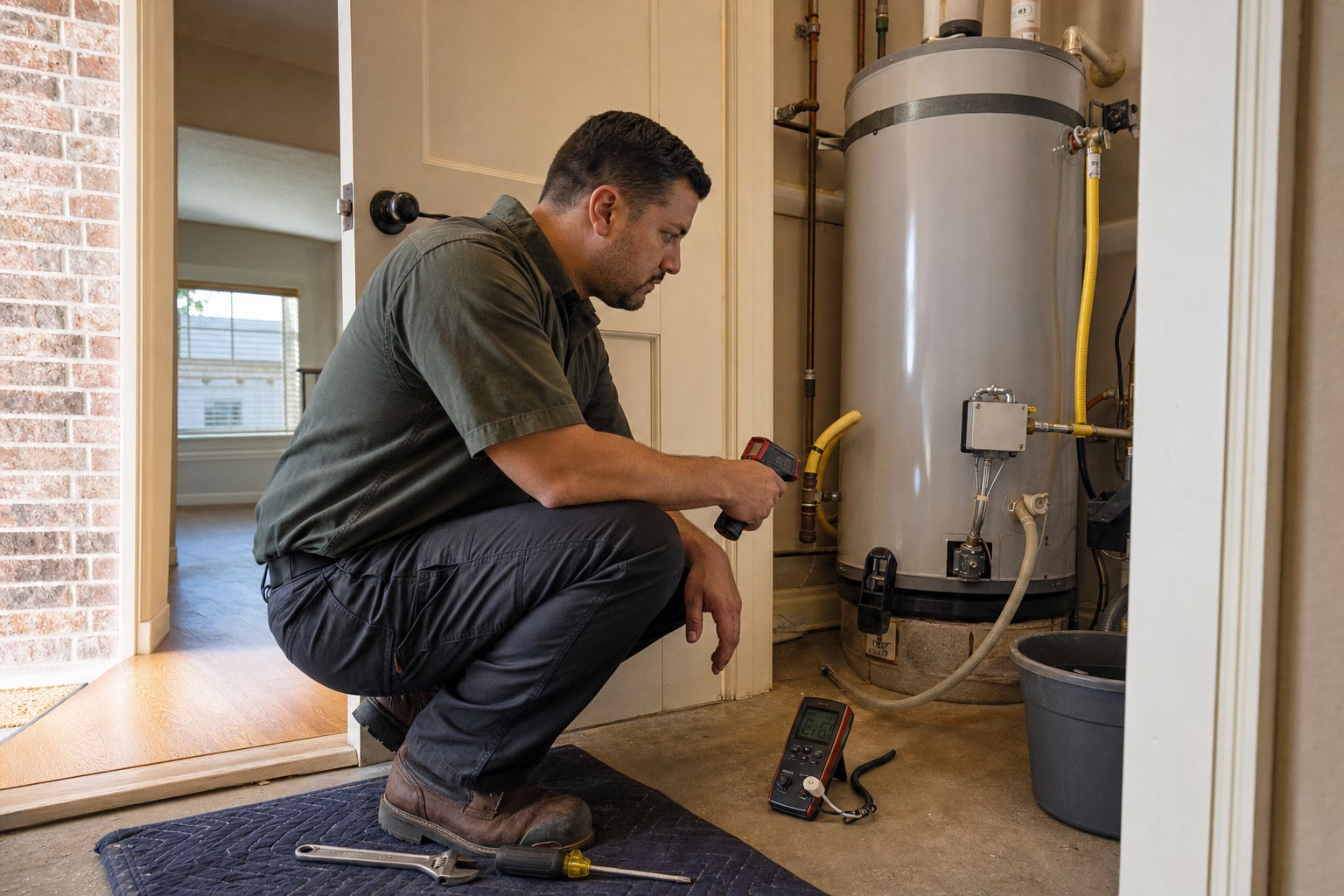
Most water heater noises are fixable, but they don’t fix themselves. The longer sediment sits, the harder it becomes to remove and the closer the tank gets to failure. If your heater is making any of the sounds described above, call Texas Plumbing and Drain at (682) 452-6455 to schedule a diagnosis. If the situation feels urgent, reach out to an emergency plumber in Aledo, TX right away. Ask any plumber you hire whether they are licensed and insured before work begins.
FAQs
Is a popping water heater dangerous?
A popping water heater is not immediately dangerous, but it signals sediment buildup that reduces efficiency and shortens tank life. If the popping is accompanied by a rumbling or boiling sound, or if the T&P relief valve is dripping, those are signs of elevated pressure or overheating that need prompt professional attention.
Can I flush my water heater myself to stop the popping?
Yes, a basic tank flush is a DIY-friendly task. Turn off the burner or heating element, connect a garden hose to the drain valve, and let several gallons run out until the water clears. However, if the sediment has hardened into scale, flushing won’t fully remove it and a plumber’s assessment is the next step.
How often should a water heater be flushed in Aledo, TX?
Because Parker County water is hard, most plumbers recommend flushing a tank water heater every 12 months in this area. Homes on private wells with very high mineral content may benefit from flushing every 6 months. A water softener can extend the interval significantly.
My water heater is only 3 years old. Why is it already making noise?
Hard water accelerates sediment buildup regardless of the unit’s age. A 3-year-old tank in a high-mineral-content area can accumulate enough scale to cause popping. Annual flushing from the start of the unit’s life prevents this. If flushing doesn’t quiet the noise, have a plumber check the anode rod and thermostat setting.
What does it mean if my water heater sounds like it’s boiling?
A boiling or gurgling sound usually means the sediment layer is thick enough that water is superheating beneath it. This is a more advanced stage of the sediment problem and can cause the tank to overheat. Have it inspected soon. A plumber can determine whether flushing, element replacement, or a new unit is the right fix.
How much does it cost to repair a noisy water heater?
Costs vary widely depending on the cause. A simple tank flush is relatively inexpensive. Replacing a heating element or anode rod typically runs in the low-to-mid hundreds as a general range. Full tank replacement costs more. For a local estimate, see How Much Does a Plumber Cost in Aledo, TX? for context on typical plumbing service pricing in this area.
Can high water pressure cause water heater noises?
Yes. Pressure above 80 psi forces water into the tank faster than the inlet valve is designed to handle, which can cause hissing, whining, or banging. High pressure also stresses the T&P valve and can cause it to weep. A pressure-reducing valve set to 50-60 psi resolves this and protects the entire system.
When should I replace instead of repair my noisy water heater?
If the tank is 10 or more years old, has visible rust on the exterior, produces rusty water, or has a cracked tank floor, replacement is usually the better investment. Repairs on an aging tank often buy only 1-2 more years of service. A Plumber in Aledo, TX can give you an honest assessment after inspecting the unit.
Let’s Sort It Out
If your water heater is still making noise after reading this, give Texas Plumbing and Drain a call and we’ll take a look.