Why Does Your Water Heater Make Popping or Rumbling Sounds? Common Causes Explained
A water heater making popping or rumbling sounds is almost always caused by sediment buildup on the tank floor. Minerals from hard water, especially the calcium and magnesium common in Parker County, settle at the bottom of the tank over time. When the burner fires, water trapped beneath that sediment layer heats up and forces its way through, creating the popping, rumbling, or knocking you hear.
That said, sediment isn’t the only culprit. Depending on when the noise happens and what it sounds like, the cause could be a failing heating element, high water pressure, a faulty temperature-and-pressure (T&P) relief valve, or normal thermal expansion. Each one has a different fix and a different level of urgency.
Use the symptom table below to find your situation, then read the matching section for what to check and when to call a plumber.
Quick Symptom Reference: Water Heater Noises at a Glance
Sound You Hear
When It Happens
Most Likely Cause
Urgency
Popping or percolating
During heating cycle
Sediment buildup on tank floor
Moderate — schedule soon
Low rumbling or boiling
Constant or during heating
Heavy sediment, overheating
High — inspect promptly
Sizzling or hissing
After hot water use
Condensation or small leak on element
Moderate to high
Ticking or tapping
As tank heats or cools
Thermal expansion in pipes or straps
Low — usually normal
Knocking or banging
When hot water shuts off
Water hammer from high pressure
Moderate — check pressure
Screeching or whining
When a tap is open
Partially closed inlet valve
Low — easy DIY check
Rumbling plus T&P valve dripping
During or after heating
Excessive pressure or temperature
High — call a plumber
If You Hear Popping During the Heating Cycle
Popping during the heating cycle almost always means sediment has accumulated on the tank floor. In Aledo and the surrounding Parker County area, water hardness commonly runs between 200 and 400 mg/L (roughly 12 to 23 grains per gallon), which is well above the EPA’s secondary standard of 120 mg/L. That mineral load accelerates sediment formation significantly compared to softer-water regions.
What is actually happening
Calcium carbonate and magnesium deposits settle at the bottom of the tank. The burner heats the metal floor, water gets trapped under the crust, and steam bubbles pop through the layer. It sounds alarming, but the tank isn’t boiling over. The real danger is what the sediment does over time: it insulates the burner, raises energy use, and can cause the tank bottom to overheat and eventually fail.
What you can safely check
Listen for the sound specifically during the heating cycle (the burner running), not randomly throughout the day.
Check the age of your water heater. Most tank units last 8 to 12 years. If yours is past that range, sediment flushing may not be worth the cost.
Look at the hot water quality. Discolored or rusty water alongside the noise suggests heavy corrosion, not just sediment.
When to call a professional
A plumber can flush the tank to remove loose sediment, which often quiets the noise and improves efficiency. If the tank is older than 10 years or the sediment has hardened into a solid layer, flushing may not help much. At that point, Water Heater Installation in Aledo, TX is often the more cost-effective path.
If You Hear a Constant Rumbling or Boiling Sound
A low, continuous rumble, especially one that sounds like water boiling, points to a more serious condition than light sediment. This sound usually means the tank is overheating, the thermostat is set too high, or sediment has built up so heavily that the burner can’t transfer heat efficiently and is running almost continuously.
A rumbling water heater isn’t just noisy — it’s working harder than it should, and that extra strain shortens the tank’s life faster than almost anything else.
What you can safely check
Check the thermostat setting. The U.S. Department of Energy recommends setting water heater thermostats to 120°F for most households. Settings above 140°F increase sediment formation and scalding risk.
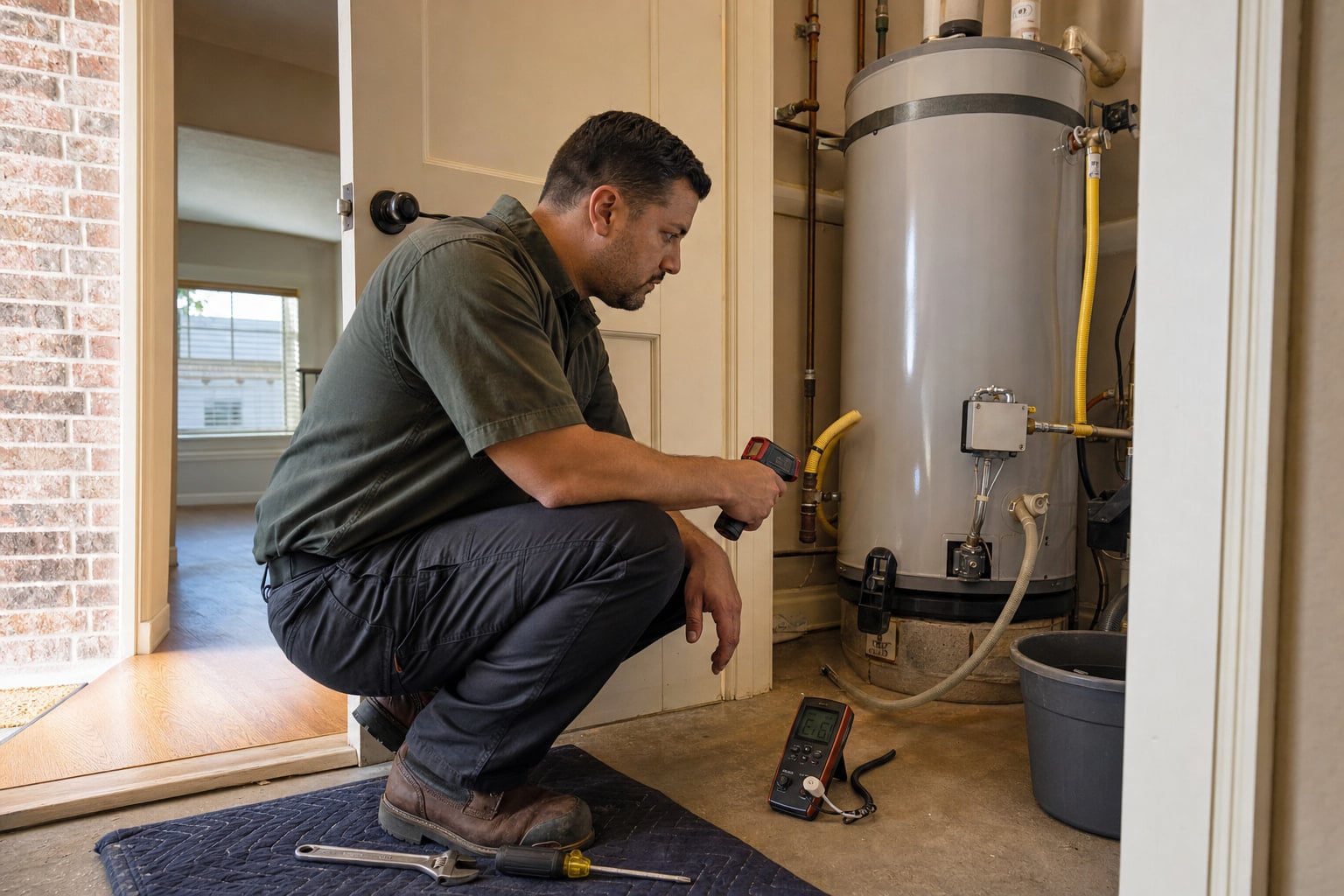
Feel the outside of the tank near the bottom. Excessive heat to the touch (not just warm) suggests the burner is overworking.
Check whether the T&P relief valve is dripping. A dripping valve means pressure or temperature inside the tank is reaching the valve’s trigger point, typically 150 psi or 210°F.
When to call a professional
Don’t ignore a rumbling tank combined with a dripping T&P valve. That combination signals a pressure or temperature problem that can escalate quickly. Contact a Emergency Plumber in Aledo, TX rather than waiting for a scheduled appointment.
Popping Sounds Getting Worse?
Don’t wait until a small noise turns into a bigger problem. Give us a call and we’ll take a look.
Sizzling after you’ve used hot water usually means moisture is hitting a hot surface. On a gas water heater, condensation dripping onto the burner is the most common cause and is often harmless on newer units. On an electric water heater, sizzling can mean a heating element is failing or there’s a small internal leak.
What you can safely check
Look for water pooling around the base of the unit. Even a small puddle matters.
On a gas unit, check whether the sizzling happens only during the first few minutes after a cold-water refill. That’s typically condensation and resolves on its own.
On an electric unit, check the access panel for signs of moisture or corrosion around the element gaskets.
When to call a professional
Any active leak from the tank body, the element ports, or the connections at the top of the unit needs professional attention. A plumber can determine whether Water Heater Repair in Aledo, TX will solve it or whether the tank has corroded past the point of repair.
If You Hear Ticking or Tapping as the Tank Heats or Cools
Ticking and tapping are the least urgent noises on this list. Metal pipes and tank straps expand when hot water runs through them and contract when they cool. That movement against wood framing, pipe hangers, or the tank jacket creates a ticking sound. It’s the same principle as a car engine ticking after you park it.
What you can safely check
Confirm the sound tracks with the heating cycle starting or ending, not randomly throughout the day.
Check that pipe straps and hangers aren’t too tight. A strap that doesn’t allow any movement will amplify the tick.
Look at the heat trap nipples on the inlet and outlet connections. Some plastic-insert heat traps tick as water flows through them and are completely normal.
When to call a professional
Ticking alone rarely needs a service call. If it’s accompanied by any other symptom from this list, mention it when you call. It can help a plumber narrow down the diagnosis faster.
If You Hear Knocking or Banging When Hot Water Shuts Off
A sharp knock or bang when you close a faucet is water hammer, not a water heater problem specifically. But the water heater is often blamed because the sound travels through the pipes and seems to come from that direction. High water pressure is the root cause. Residential water pressure should stay between 40 and 80 psi according to most plumbing codes. Above 80 psi, water hammer becomes more pronounced and pipe fittings wear faster.
What you can safely check
Buy a simple pressure gauge at a hardware store (typically $10 to $20) and thread it onto an outdoor hose bib. A reading above 80 psi confirms high pressure.
Check whether the banging happens at every fixture or just one. A single fixture suggests a faulty valve at that location. Whole-house banging points to a pressure problem.
If You Hear Screeching or Whining When a Tap Is Open
Screeching while hot water is running usually points to a partially closed valve, not the water heater itself. The inlet shutoff valve above the tank, or a valve somewhere along the hot water line, may have been bumped partially closed. Water forced through a narrow opening creates that high-pitched whine.
What you can safely check
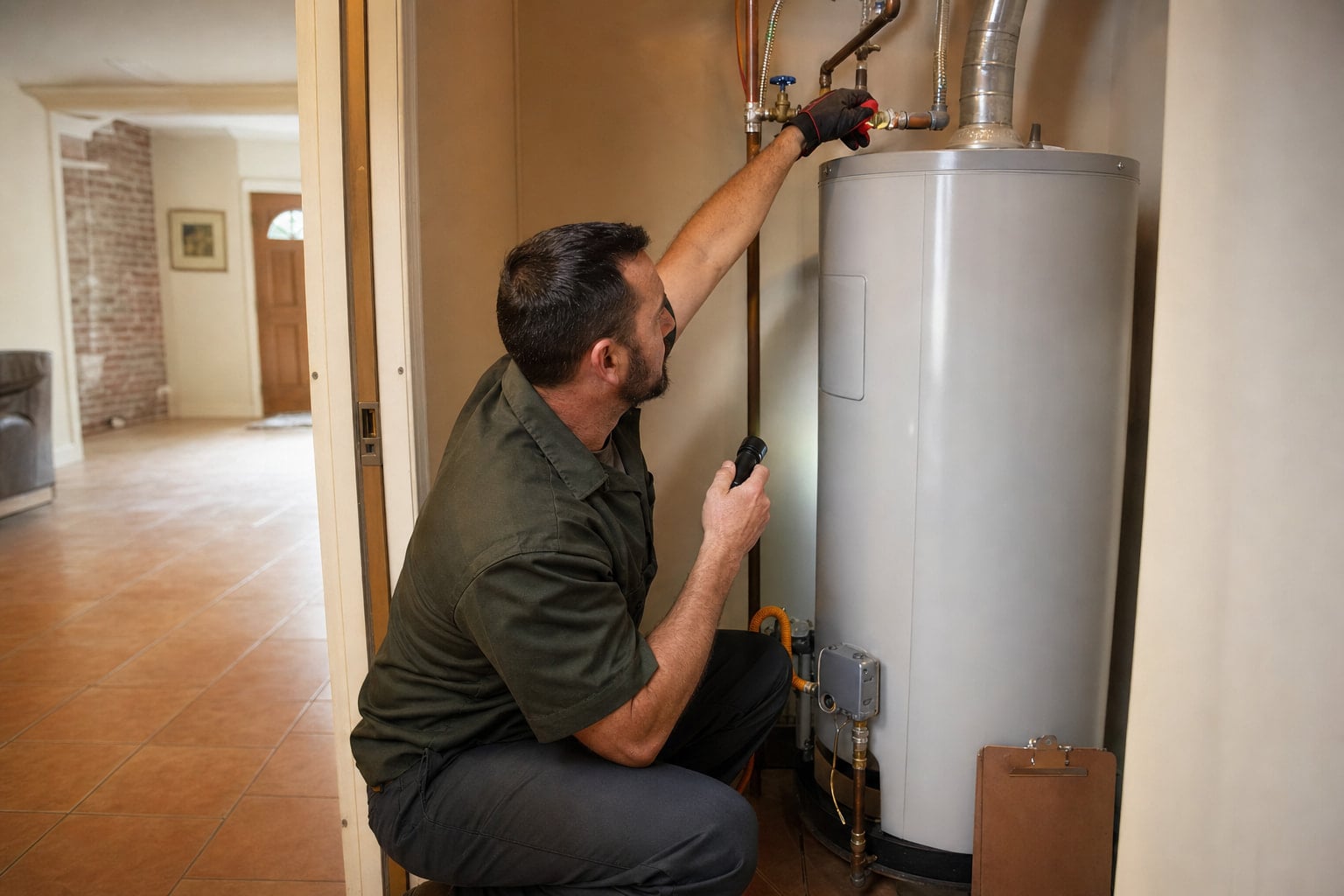
Locate the cold-water inlet shutoff valve at the top of the water heater. Make sure it’s fully open (handle parallel to the pipe on a ball valve, or turned fully counterclockwise on a gate valve).
Check any other shutoff valves along the hot water distribution lines in your home.
When to call a professional
If all valves are fully open and the screeching continues, the inlet valve itself may be failing internally. A plumber can replace it without draining the whole system in most cases.
Water Heater Repair, Aledo
If flushing the tank doesn’t quiet things down, our team handles water heater repair and replacement for Aledo homeowners.
Parker County’s hard water makes annual maintenance more important here than in softer-water areas. A few simple habits extend tank life and keep things quiet.
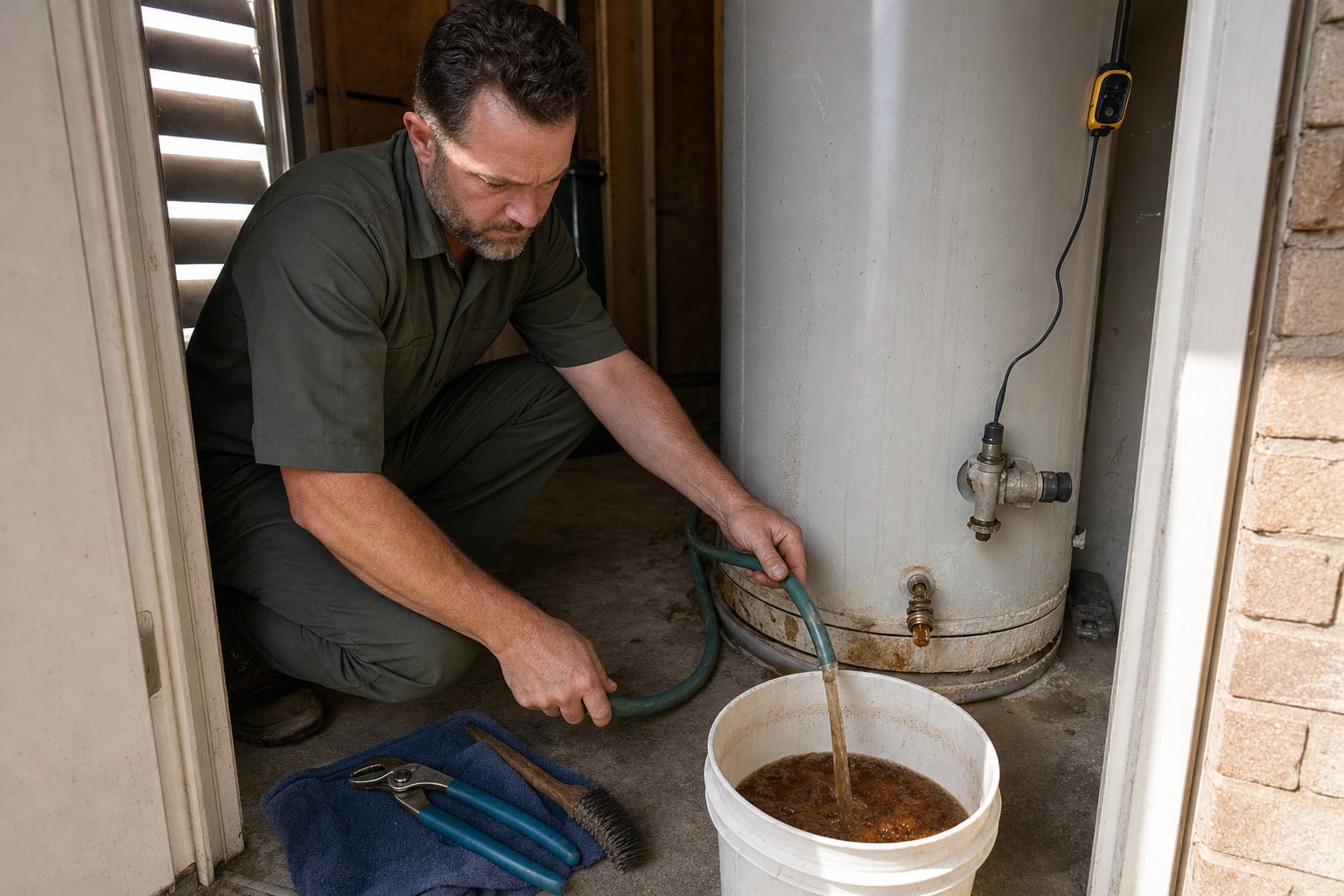
Flush the tank once a year. Attach a hose to the drain valve, run it to a floor drain or outside, and let 2 to 3 gallons drain until the water runs clear. This removes loose sediment before it hardens.
Check the anode rod every 3 to 5 years. The sacrificial anode rod (usually magnesium or aluminum) corrodes in place of the tank lining. A depleted rod means the tank itself starts corroding, which accelerates noise and failure.
Keep the thermostat at 120°F. Higher temperatures speed up mineral precipitation and sediment formation.
Consider a water softener. Softened water dramatically slows sediment accumulation. Texas Plumbing and Drain offers water softener and water filtration services if you want to explore that option.
Inspect the T&P valve annually. Lift the test lever briefly to confirm it opens and reseats. A valve that won’t open or won’t reseat needs replacement.
If your water heater is making popping or rumbling sounds and you’re not sure what’s causing it, the team at Texas Plumbing and Drain can diagnose it and walk you through your options. Call us at (682) 452-6455 or request a service visit online. For situations that can’t wait, you can also reach out to an emergency plumber in Aledo, TX any time.
FAQs
Is a popping water heater dangerous?
Popping alone is not immediately dangerous, but it signals sediment buildup that shortens tank life and raises energy costs. If the popping is accompanied by a dripping T&P valve, discolored water, or a rumbling sound, those combinations warrant a faster inspection. Don’t ignore it for more than a few weeks.
Can I flush my water heater myself to stop the popping?
Yes, for most homeowners a basic flush is a manageable DIY task. Turn off the burner or heating element, connect a garden hose to the drain valve, and let several gallons drain until the water runs clear. If the sediment has hardened into a solid layer, flushing won’t fully resolve it and a plumber should assess the tank.
How long does a water heater last in Aledo, TX?
Most traditional tank water heaters last 8 to 12 years under normal conditions. Aledo’s hard water can shorten that range if the tank isn’t flushed regularly and the anode rod isn’t replaced on schedule. Tankless units generally last 15 to 20 years with proper maintenance.
What does it mean if my water heater sounds like it’s boiling?
A boiling or heavy rumbling sound usually means the thermostat is set too high, sediment is forcing the burner to run longer than it should, or both. Check that your thermostat is set to 120°F. If the sound continues or the T&P valve is dripping, call a plumber promptly rather than waiting.
Why does my water heater make noise only at night?
Water heaters often run more at night because hot water demand drops and the tank temperature falls, triggering a longer heating cycle. The house is also quieter, so you notice sounds you’d miss during the day. The cause is still the same as any other time, most often sediment or thermal expansion.
Should I replace my water heater if it’s making noise?
Not necessarily. If the tank is under 8 years old and the noise is sediment-related, a flush and anode rod check may resolve it. If the tank is 10 or more years old, repairs and maintenance costs can add up quickly. A plumber can help you weigh repair versus replacement based on the tank’s actual condition.
Can high water pressure cause water heater noise?
Yes. Pressure above 80 psi stresses the tank, fittings, and the T&P valve. It can cause banging (water hammer) and contribute to a dripping relief valve. A pressure gauge on your hose bib will tell you where you stand. If pressure is high, a pressure-reducing valve is the standard fix.
Time for a New Unit?
Sometimes repair makes sense, sometimes replacement does. We’ll give you a straight answer either way.