What Is a Plumbing Pressure-Reducing Valve and How Does It Protect Your Home’s Pipes?
A plumbing pressure-reducing valve (PRV) is a small but critical device installed on your main water line that automatically cuts incoming street pressure down to a safe level before it reaches your fixtures, pipes, and appliances. For most homes, that means keeping pressure between 40 and 60 PSI, well below the 80 PSI threshold where pipe joints, fittings, and water heater tanks start to take real damage.
If your Aledo home sits in a neighborhood where the municipal supply runs above 80 PSI (common in parts of Parker County where elevation changes affect line pressure), a working PRV is the single most cost-effective thing standing between your pipes and a burst fitting. Without one, or with a failing one, high pressure quietly shortens the life of every fixture in the house.
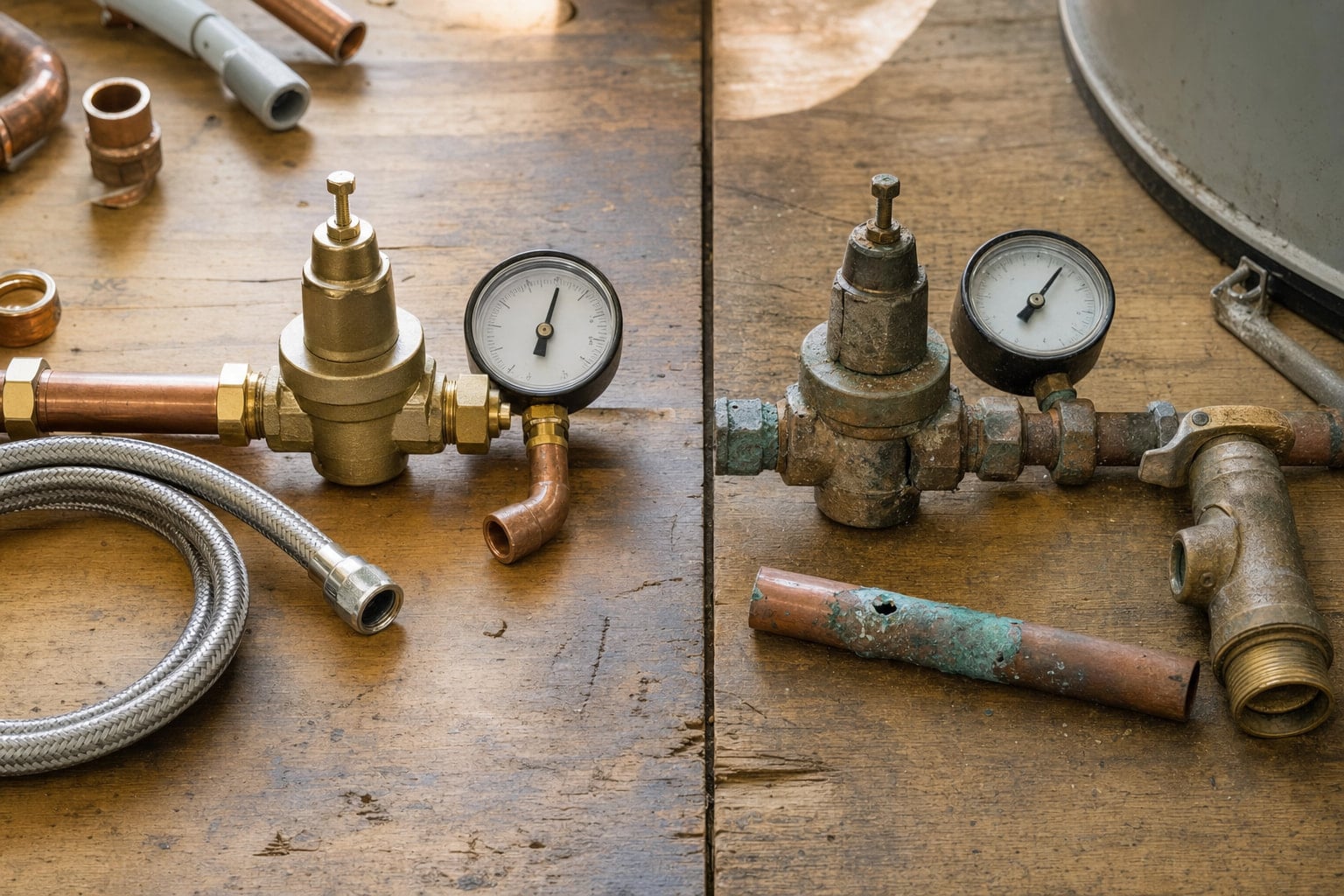
This post compares homes with a properly functioning PRV versus homes without one (or with a failed one), so you can decide whether your situation needs attention.
PRV vs. No PRV: At-a-Glance Comparison
Factor
Home With a Working PRV
Home Without a PRV (or Failed PRV)
Typical indoor water pressure
40 to 60 PSI (regulated)
60 to 150+ PSI (uncontrolled)
Pipe and joint stress
Low; fittings last their rated lifespan
High; micro-cracks and pinhole leaks develop faster
Water heater lifespan
Normal (8 to 12 years for a tank unit)
Shortened; relief valve cycles more often
Fixture and appliance wear
Washers, seals, and solenoids last longer
Faucet washers, dishwasher solenoids wear out faster
Water waste
Lower; fixtures flow at rated GPM
Higher; excess pressure forces more water through
Typical installed cost
Estimated $250 to $600 installed (general range)
Potential repair costs: hundreds to thousands for burst pipes or water damage
What a Working Plumbing Pressure-Reducing Valve Actually Does
A functioning PRV uses a spring-loaded diaphragm to sense downstream pressure and throttle the inlet automatically. Most residential models are preset to deliver 50 PSI at the outlet, though a plumber can adjust them within a range of roughly 25 to 75 PSI using a set screw on top of the valve body.
Pros of Having a Working PRV
Protects every pipe in the house from chronic over-pressure stress, including copper, CPVC, and PEX runs.
Extends water heater life. High pressure forces the temperature-and-pressure (T&P) relief valve to open more often, wearing out the seat. Proper pressure keeps that from happening. If you’re already dealing with heater issues, see our page on Water Heater Repair in Aledo, TX.
Reduces water bills. The EPA estimates that the average U.S. household leaks roughly 10,000 gallons per year from small drips and running toilets, many of which are worsened by excess pressure.
Quieter pipes. Water hammer (that banging noise when a valve closes fast) is directly related to line velocity and pressure. A PRV set to 50 PSI dramatically reduces hammer events.
Appliance protection. Dishwashers, washing machines, and refrigerator ice makers all have rated inlet pressure limits, typically 20 to 120 PSI, but they perform best and last longest at 50 to 60 PSI.
Cons and Limitations of a PRV
It does wear out. Most PRVs last 7 to 12 years before the diaphragm or spring degrades. A failed PRV can stick open (letting full street pressure through) or stick closed (dropping house pressure to a trickle).
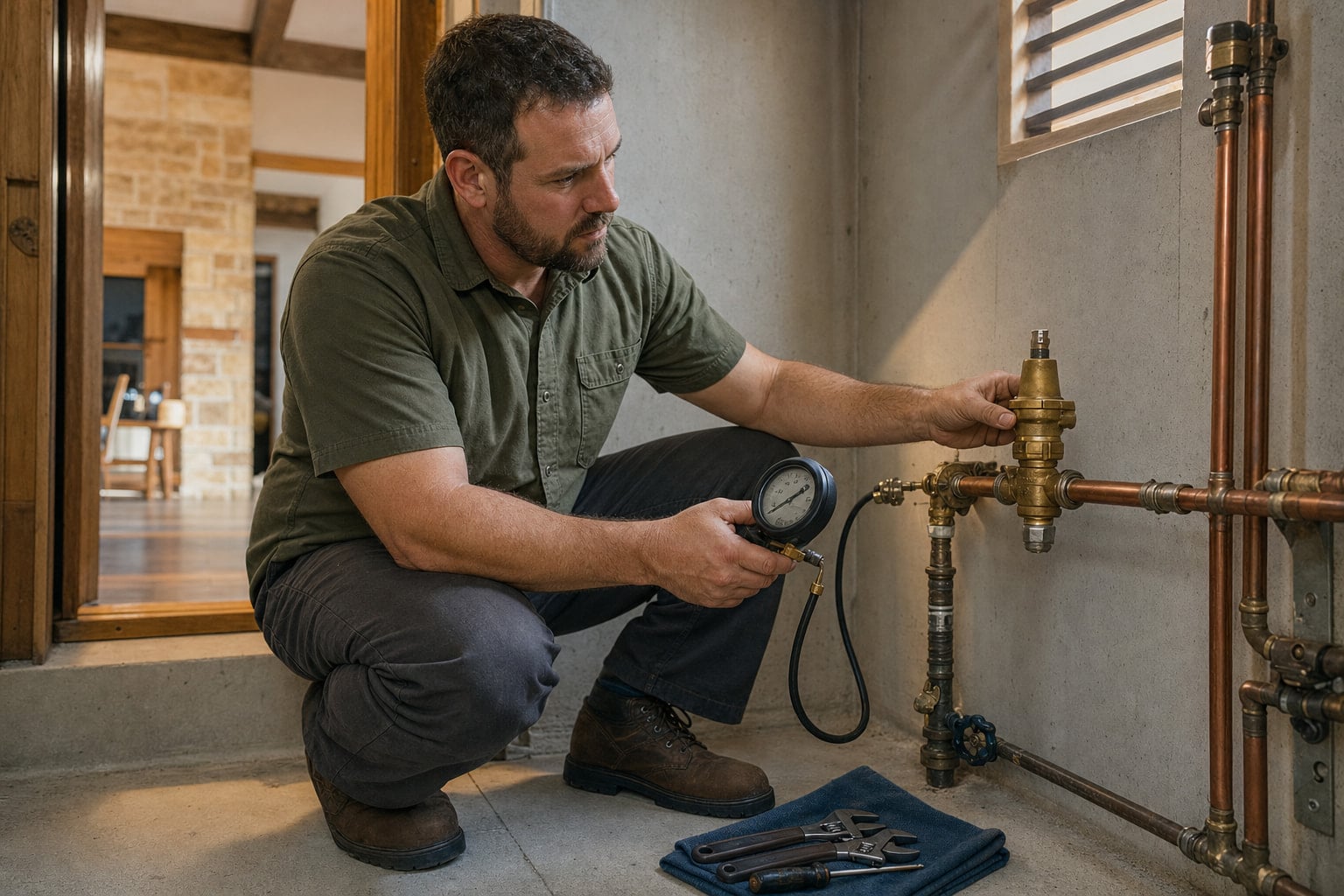
It needs periodic testing. You should check your house pressure with a simple gauge (available at hardware stores for under $15) once a year. Anything above 80 PSI means the PRV needs adjustment or replacement.
It doesn’t fix every pressure problem. If low pressure is your issue, a PRV set too low is actually the cause. A PRV only reduces pressure; it can’t boost it.
Installation requires shutting off the main. This is a job for a plumber, not a DIY project, because it involves cutting into the main supply line and soldering or pressing fittings.
Best For
A properly functioning PRV is the right setup for virtually every home where municipal supply pressure exceeds 60 PSI. In Aledo and surrounding Parker County communities, street pressure often runs between 80 and 100 PSI depending on the subdivision and proximity to a water tower. If your home was built after 2002, Texas plumbing code generally required a PRV at installation; older homes may never have had one.
Not Sure About Your PRV?
We can check your pressure and let you know if your valve needs adjustment or replacement.
What Life Looks Like Without a PRV (or With a Failed One)
Running your home’s plumbing without pressure regulation, or with a PRV that has quietly failed open, puts every pipe, joint, and appliance under constant stress. The damage is cumulative and often invisible until something fails dramatically.
High water pressure is the silent landlord of plumbing failures: it collects rent from your pipes every single day until they can’t pay anymore.
The Real Risks of Unregulated High Pressure
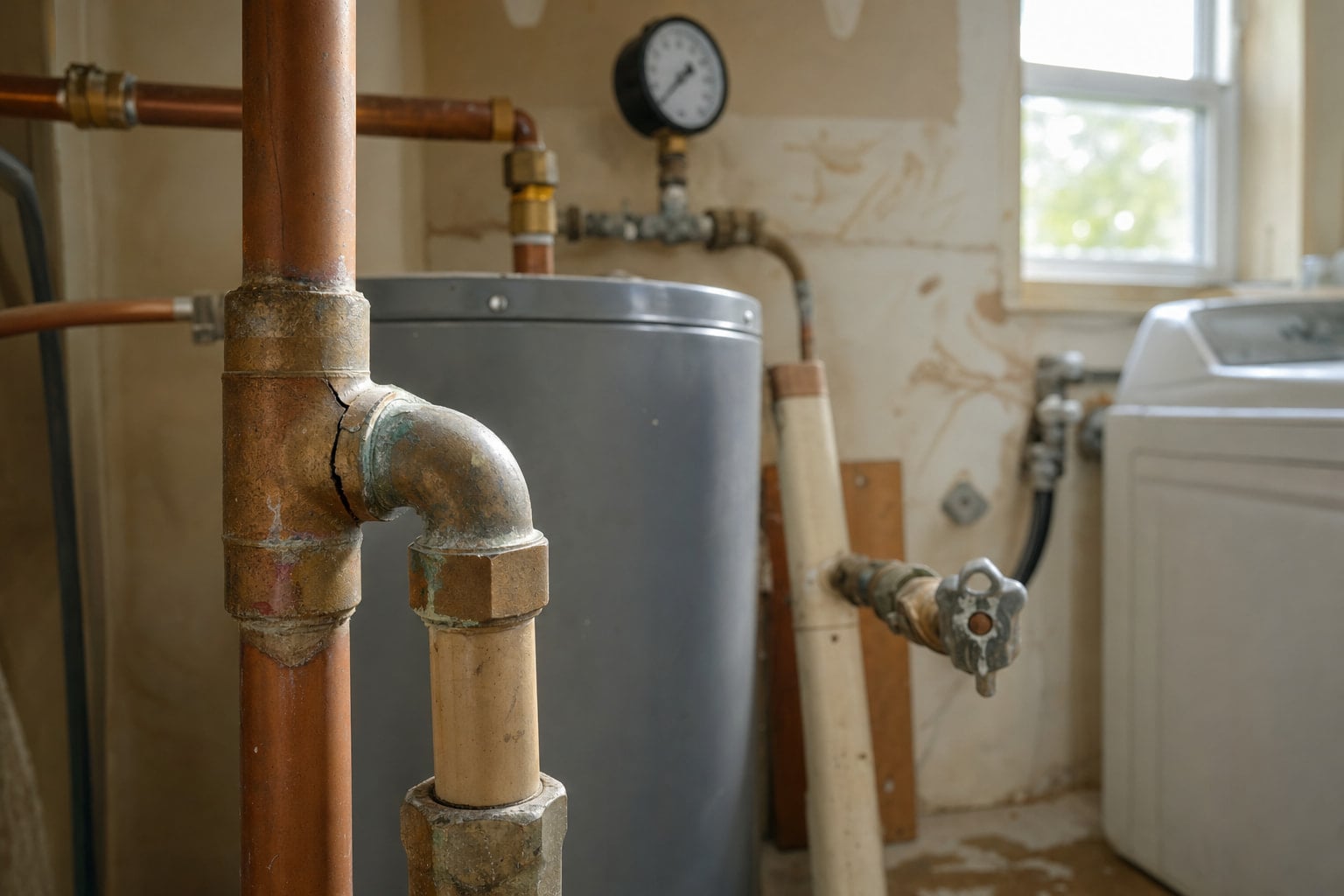
Pinhole leaks in copper pipe. Sustained pressure above 80 PSI accelerates erosion corrosion, especially at elbows and tees. These leaks often go undetected inside walls for months.
Burst supply lines. Braided stainless supply lines to toilets and faucets are rated for specific pressure ranges. Chronic over-pressure is a leading cause of supply line failures, which can dump hundreds of gallons into a home before anyone notices. Water damage from a single burst line can run into the tens of thousands of dollars in repairs.
Running toilets and dripping faucets. Flapper valves and faucet cartridges are designed for normal pressure. High pressure forces water past worn seals constantly, making those fixtures nearly impossible to stop leaking without also fixing the pressure.
Shortened water heater tank life. Every time pressure spikes, the T&P valve is stressed. Over time, the valve itself can fail to reseat properly, creating a slow drip at the discharge pipe. If you’re seeing that, it’s worth checking out Water Heater Installation in Aledo, TX to understand your replacement options.
Noisy pipes and water hammer. Banging pipes aren’t just annoying; repeated hammer events can loosen solder joints and push pipe hangers loose over time.
Pros of Going Without (There Aren’t Many)
Honestly, the only scenario where skipping a PRV makes sense is a private well system where a pressure tank already regulates output to a safe range, or a rural property where supply pressure is naturally low (under 55 PSI). In those cases, adding a PRV could actually drop pressure too low for good shower flow. A plumber can measure your incoming pressure and tell you exactly where you stand.
Worst For
Homes without a PRV face the highest risk when they’re on a municipal line with variable pressure, near a fire hydrant (pressure can spike during hydrant flushing), or in a newer subdivision where the utility runs higher pressure to serve elevated lots. If you’ve had repeated faucet or toilet repairs and nobody has checked your line pressure, that’s a strong signal something is off.
Which Should You Choose? PRV Repair, Replacement, or New Installation?
The answer depends on what you find when you test your pressure. Here’s a simple decision framework for Aledo homeowners.
House pressure reads 40 to 60 PSI and the PRV is under 10 years old: You’re in good shape. Test again next year.
House pressure reads 60 to 80 PSI: The PRV may need adjustment. A plumber can turn the set screw and retest in about 30 minutes.
House pressure reads above 80 PSI: The PRV has likely failed or was never installed. Replacement or new installation is the right call. The International Plumbing Code (IPC) Section 604.8 requires a PRV when static pressure exceeds 80 PSI, and most Texas jurisdictions have adopted this standard.
House pressure is very low (under 35 PSI) and you have a PRV: The valve may be stuck closed or set too low. Adjustment or replacement fixes this quickly.
You’ve had multiple supply line failures or pinhole leaks in the last few years: Get pressure tested immediately. Chronic over-pressure is the most common overlooked cause of repeated pipe failures.
High pressure also stresses drain connections and can contribute to the kind of recurring clogs and joint leaks covered in our 7 Warning Signs Your Drains Need Cleaning in Aledo, TX post. Plumbing problems rarely travel alone.
Pipe Repair in Aledo
Unregulated pressure can split joints and wear out fixtures faster than you’d expect.
Schedule a Pressure Test or PRV Service in Aledo, TX
If you’re not sure whether your home has a PRV, where it’s located, or whether it’s still working, the fastest answer is a pressure gauge on your hose bib. If that reading is above 80 PSI, call a Plumber in Aledo, TX to get the valve inspected before the next pipe failure happens. Texas Plumbing and Drain serves Aledo and the surrounding Parker County area, including River Oaks and nearby communities.
For urgent situations, like a burst supply line or a PRV that has failed and caused a flood, reach out to an emergency plumber in Aledo, TX right away. And for general Plumbing in Aledo, TX, including kitchen and bathroom fixture work that often goes hand-in-hand with pressure corrections, we’re ready to help.
Call Texas Plumbing and Drain at (682) 452-6455 to schedule a pressure test or PRV inspection.
FAQs
How do I know if my home has a pressure-reducing valve?
Look on the main water supply line just after it enters the house, typically near the water meter or main shutoff. A PRV looks like a bell-shaped or dome-shaped brass fitting with an adjustment screw on top. Homes built in Texas after the early 2000s usually have one; older homes may not.
What PSI should my home water pressure be set to?
Most plumbers and the International Plumbing Code recommend 40 to 60 PSI for residential systems. Anything above 80 PSI is considered high and can damage pipes, fixtures, and appliances over time. You can check yours with a pressure gauge threaded onto any hose bib.
How long does a pressure-reducing valve last?
A typical residential PRV lasts 7 to 12 years, though some last longer with clean water and stable pressure. Signs it’s failing include pressure that creeps above 80 PSI, a sudden drop in house pressure, or a T&P relief valve that drips constantly on your water heater.
Can I adjust my PRV myself?
Technically yes, there’s a set screw under a locking nut on top of the valve. But you need a pressure gauge downstream to know where you’re landing, and over-tightening can damage the diaphragm. Most homeowners are better off having a plumber make the adjustment and verify the result with a calibrated gauge.
Does a PRV affect hot water pressure differently than cold?
The PRV regulates the cold supply entering the house. Hot water pressure is derived from that same regulated supply, so both sides benefit equally. If your hot side feels weaker than cold, the issue is more likely a partially closed valve at the water heater or sediment buildup inside the tank, not the PRV.
Will a new PRV lower my water bill?
It can. High pressure forces more water through every open fixture than the flow rate you actually need. Dropping from 100 PSI to 55 PSI can meaningfully reduce flow at faucets and showerheads, which adds up on a monthly water bill, especially for larger households running multiple fixtures daily.
Is a PRV required by code in Aledo, TX?
Texas jurisdictions that have adopted the International Plumbing Code (IPC) require a PRV when static supply pressure exceeds 80 PSI. Parker County and most municipalities in the Fort Worth metro area follow this standard. Check with your local building department for the specific adopted code version in your area.
What happens if a PRV fails completely?
A PRV can fail in two ways: stuck open (full street pressure floods the house system) or stuck closed (pressure drops to nearly zero). A stuck-open failure is the more damaging one, as it exposes every pipe and appliance to unregulated pressure. If your pressure suddenly spiked or dropped, have a plumber test and replace the valve promptly.
Call Texas Plumbing and Drain
Our team handles PRV installs, pipe repairs, and everything in between for Aledo homeowners.